Showing posts with label China. Show all posts

Sunday, April 15, 2018

Tracing the Early Route of Tea into Europe


Azulejos (blue tiles) in the Monastery of São Vicente de Fora, where Catharina de Bragança is entombed

I've been wanting to write this blog post for two months. I'm not prone to writer's block, but I didn't know where to begin. Well, here it is: For a tea lover, I've recently had the most wonderful opportunity to travel from Macau* to Portugal (OK, Spain was in the middle, but we won't hold a grudge).  Tea Friends - As you may know, Macau to Portugal is a primary historical route of how tea made its way into Europe. This just makes me totally tea geek out!

Where to start?  Egg tarts.  If you've ever enjoyed dim sum, you were most likely tempted by these delightful treats. They remind me of my grandmother's custard pie. The first one below I enjoyed in Macau and the second in Portugal. The sweet came to Macau along with the Portuguese traders, and tea went the other way.  


The first Portuguese ships made their way to China in 1516, but it wasn't until over 40 years later that missionary Gaspar da Cruz wrote the first Portuguese account of tea. Macau was leased to the Portuguese as a trading post in 1557 (though it had been in use prior), and 330 years later was negotiated as a Portuguese colony. This gave Portugal huge advantages over its trading rival, the Dutch, who didn't build a stronghold until 1624, on the Isle of Formosa (Taiwan). Let me say that any time one culture thinks it knows best (colonization) there are many ugly outcomes. I don't want to romanticize this historical epoch. Rather, I'm attempting to explain why tea was consumed in Portugal. The Portuguese were among the earliest European traders with China. Good ideas (tea) move quickly across cultures.  Read more in this interesting Smithsonian article. 

You've likely heard about Catherine de Braganza, the Portuguese princess who married England's Charles II in 1662. Tea drinking was yet an oddity, a rarity, among the British. The now-Queen was a dedicated tea drinker and brought tea in her dowry, along with a port in Bombay. As does the Queen, so go the people. (Read more in this BBC article). 


Portrait of Catharina de Bragança, São Vicente de Fora monastery
It's my favorite portrait of her, and the photo doesn't do it justice.

This union, of course, was a political one.  Catherine had suitors starting when she was eight years old. Her role in life was to be a negotiated bride to another country. England won her hand and her wealth. In return, Portugal received military help in protecting its borders from Spain. 

When I visited Windsor Castle several years ago, I learned that Charles II built a southern-facing turret for Catherine. A nice gesture, especially since she was not a particularly beloved Queen. Her customs were different (she was Catholic and Charles had to make special dispensation for this). Her clothing was different. She preferred sunnier climes.  Charles had many mistresses, and he and Catherine were unable to produce an heir.  

It's worth noting that when Catherine moved to England, she would have drank her tea from a handleless cup, probably one that came from China along with her tea.  Cups with handles made their entrance in the early 1700's. Catherine died in 1705, so it's possible she would have seen the transition. She returned to Portugal in 1692, over a decade after Charles' death.


Azulejo tiles depicting Catherine's father, King John IV

Catherine is laid to rest at the Monastery of Sao Vicente de Fora. You will find her tomb in the pantheon for the Braganza family. I find it interesting that her name, etched in gold, gives preference to her British title, as Queen of England. Should you find yourself in Lisbon, this is a must-see.  It's in the old part of the city. I spent three hours at the monastery, viewing the courtyard, the museum, the azulejos (amazing!!!), the pantheon, climbing to the rooftop and sitting in the courtyard drinking tea (bring your own) and toasting Catherine. 

Tomb of Catharina de Bragança, Monastery of São Vicente de Fora

View from the rooftop of the monastery

You can also read more about visiting this site from Denise. And big thanks to her; it's because of her notes that I was inspired to find the monastery! 

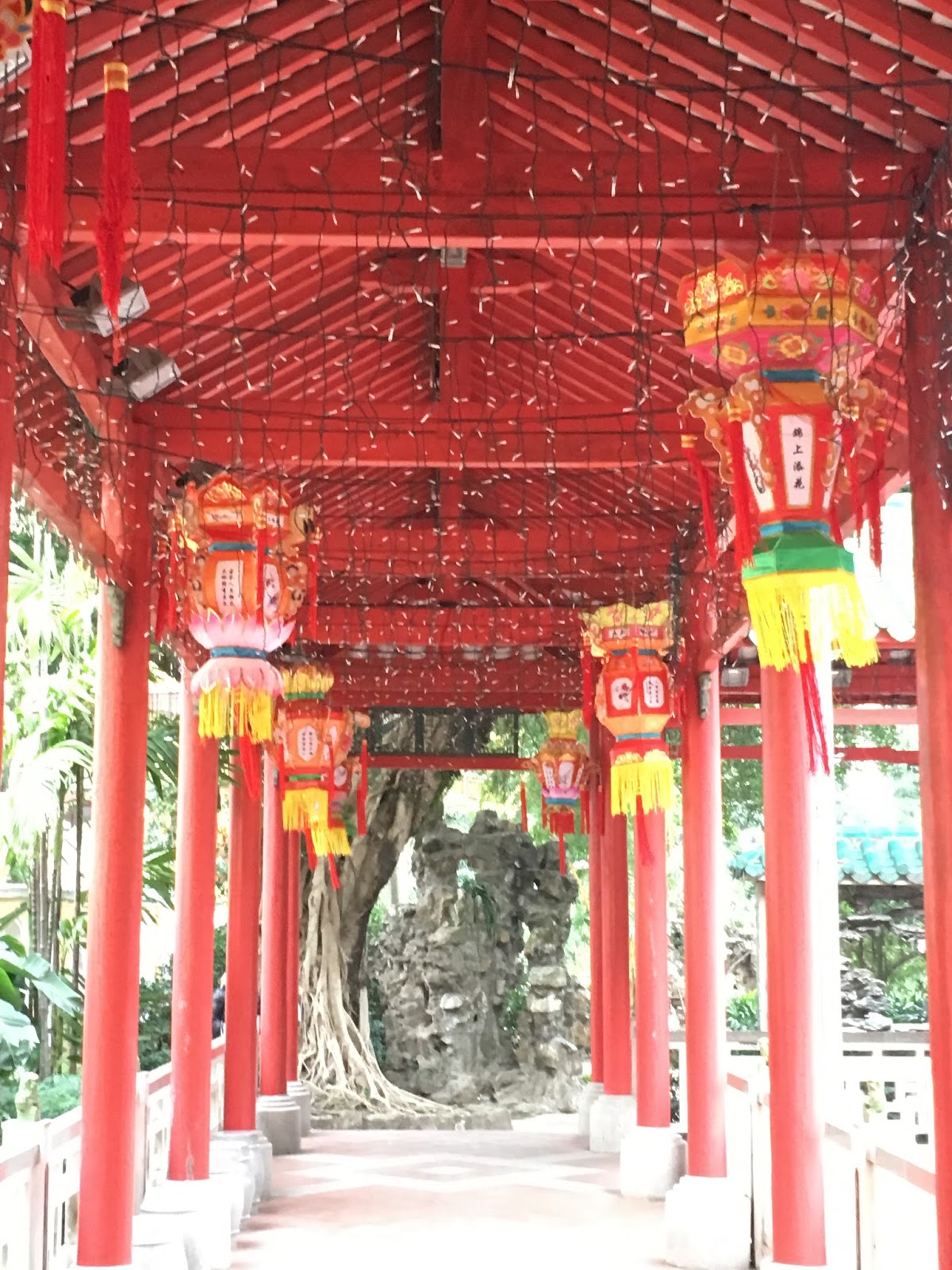
One more connection that showed itself while I was traveling.  The photos below are of a Chinese garden (within the Botanical Garden in Belém, region of Lisbon -- which is also where you can find the most famous egg tarts).  In the second photo, we've been transported back to Macau. :-)


*Macau is the modern Portuguese spelling. Macao is the English spelling.  

Thursday, March 08, 2018

Happy International Women's Day


From my 2011 post...

"So I will begin with what is most vivid in my mind, and that is the lives of the people who work the tea fields.  The photo above is among my favorites.  Notice the dirt under her fingernail, the pretty silver band she wears, the lines in her hand, the vibrancy of the green leaf.  It's all there - the hard work, the beauty in it, the struggle, the love, the tea that sustains this community.  It was a privilege to be taken to these fields and see, for a brief moment, how these people connect with me.  They pick the teas that I drink.  That I will never, ever forget."


Tuesday, February 27, 2018

Macau Tea Culture House

In the Lou Lim Ieoc Garden, Macau

After recently visiting Hong Kong, I had the wonderful opportunity to visit Macau.  I seek out tea experiences wherever I go, and was delighted to learn of the Macau Tea Culture House.  This museum opened in 2005 and is a project of the Cultural Affairs Bureau. Macau was the earliest port from which tea was traded to Europe. Super cool for we tea geeks!  Below are some of the things one will see here.  If you manage to be in Macau, most definitely visit!  The adjoining Lou Lim Ieoc Garden is also a must-see. 

The building is in Portuguese style, showing the connection between Macau and Portugal

Inside, one finds the smell of roasting tea, and a collection of tea utensils - tracing the development from handleless cups

To handles


A replica of a table at the famous Kun Nam tea house, in operation from 1953 - 1996


Upstairs, a replica of a tea house

And a very fine collection of clay teapots

Saturday, February 10, 2018

Yum Cha in Hong Kong, Lock Cha Tea House


Yum Cha is a practice, associated with Hong Kong and Cantonese-speaking parts of China, of having tea and dim sum (a variety of small dishes).  It's like brunch. I was recently in Hong Kong and had a chance to visit the Lock Cha tea house to enjoy this custom.


See the tea kettle to the side?  It's cleverly built into the table. 

We enjoyed a yellow tea (top) and a Phoenix oolong (bottom). 
The oolong was called "greenish" tea in English. 


Veggie dumplings

Cakes of pu-erh and other tea

Thursday, February 19, 2015

Chinese New Year: Year of the Goat

Stylized character of goat (also a bell)

Gong Xi Fa Cai!  Wishing you much prosperity in the new year!  Chinese New Year festivities will begin at Midnight tonight and continue for ~15 days, with some estimates telling that up to one-sixth of the world will be in celebration.  

Chinese New Year (also called Spring Festival) is based on a lunar calendar and falls on the second new moon after winter solstice, somewhere typically between January 21 and February 19th (this year's date).  


Traditions include fireworks and wearing red clothing (to scare away a mythical monster Nian), family reunions and  handing out red envelopes with money for children.  Here's a nice summary if you'd like to learn more.

Decorations at the Mandarin Oriental in Las Vegas

Have you been to a Chinese New Year celebration? Tell us about it!  My Wu-Wo group will be gathering this weekend to enjoy cups and cups of tea and a feast.  Can't wait!

Tuesday, February 26, 2013

Plum Blossoms and Tea


Plum Blossom, a sign of early spring

The Chinese culture appreciates plum blossoms as part of the three friends of winter trilogy:  pine for evergreen, bamboo for its strength and flexibility, and plum blossom for its hardiness to bloom in the coldest time of year.  The Japanese use an entire month (Feb) in the chanoyu calendar to appreciation of ume, or plum blossom. 

It's easy to understand why.  Recently, the DH and I scouted for a plum tree in the forgotten scrub of roadsides and abandoned orchards near us.  None were blooming just yet, but they offered big, fat buds full of hope and promise.  We brought home several branches and within a few days, they responded with these lovely blossoms.


Ume paper lantern, with the DH's artwork in the background

This time of year is like a big magical secret.  The plants are stirring and budding, the birds begin to return.  It's a secret because not everyone notices.  I love the noticing.  It's one of the reasons I also lovey the Japanese Tea Ceremony.  It's full of mindfulness practices of noticing the seasons.


Crane obi and plum blossom kimono, photo by the DH
Thanks to my tea friend who loaned me this very special, seasonal party kimono to wear at a recent outing

The magic of life and adventure...to spy the first crocus fronds before they bloom, to see the daffodils just barely poking their little heads out of the soil, to feel my heart soar with the first sighting of plum branches fat with buds.  The anticipation, it's delicious. 

Tuesday, February 19, 2013

Lunar (Chinese) New Year 2013


The cutest snake I've ever seen, gift from Margie Sensei

We're about half way through the Chinese New Year celebrations for 2013.  Things got rolling on February 10th, and in Asian communities worldwide this is a big celebration.  People travel to be with family, there are fireworks, lion dances and all kinds of yummy foods.  Fifteen days later, the celebration culminates with the lantern viewing festival.  (If you're in Portland, check out the festivities at the Lan Su Chinese Garden.)

2013 is the year of the Snake in the Chinese zodiac (a twelve year cycle).  People born under the snake sign are purported to demonstrate intelligence, hard work and a quiet nature.  They appreciate fine things. 

I've been afraid of snakes (the animal, not the human) since my childhood.  I think it's an inherited fear.  I've worked to reduce my sensitivity, even going to rattlesnake school when I was living in New Mexico.  (It helped.)  Perhaps this is the year to make even more peace with snakes.  After all, the Ox (my sign) is supposed to be compatible.

Gong Xi Fa Cai!  Happy and Prosperous New Year to you!

Wednesday, September 19, 2012

Temple of Heaven Park

Tai Chi in Temple of Heaven Park

One splendid day last September, I visited Temple of Heaven park in Beijing.  I was deeply moved by how people came together to "play Tai Chi", practice ballroom dancing, and to write beautiful Chinese calligraphy and poetry.  To move their bodies and experience nature in community.   

The man in the center above is a friend and former Tai Chi instructor of Dan, our tour organizer (black t-shirt, below).  Our group was encouraged to try Tai Chi, and the combination of cool breeze, warm sun, gently flowing body and energy, kind encouragement from new friends...well, truly it was like being in the temple of heaven!   
Practicing push hands, a technique that encourages attention, awareness and coordination

I met the DH (dear hubby) in a ballroom dance class 17 years ago.  Dancing holds a special place in my life, and I'm always interested in observing other dancers.  Much to my delight, people in China practice dancing in the parks!  I've thought many times in the past year about trying to get something like this going where I live.  My educator side also noticed how the instruction was being done.  Dance was being taught like a martial art - make the form, hold it, repeat, repeat, repeat.  It wasn't about constant movement but about body learning of the correct forms.   
Dancing in the Temple of Heaven Park

Below, a gentleman writes in  beautiful Chinese calligraphy.  Notice the large brush.  He is writing with water; this work of art is fleeting.  Joy in the doing.
Ephemeral art

My experience in Temple of Heaven park has returned to me often.  There are things to be learned here, and I am grateful for the opportunity.

Monday, September 17, 2012

Legend of Silk (and Tea), and Beijing Silk Factory


Did you know that the legend of silk's discovery is related to tea?

The story goes that Chinese empress Lei-tzu (wife of the Yellow Emperor Huang Di, approx 2697–2597 BC) was enjoying tea in her garden when a silkworm cocoon drifted into her cup.  The hot tea loosened the filament and as she removed it, she realized it was one long strand.  From there, an industry began...

When I toured China last fall, we visited a silk factory in Beijing.
Removing the larvae from the cocoon

Since I enjoy textiles, I found this to be very interesting.  We saw the production process from silkworm cocoon into fabric.  The machine above removes the larvae from the cocoon.  (Wasting nothing, the silkworm larvae become a beer snack, and I brought some home for the DH.)

The cocoons are boiled, allowing the filament to loosen into a strand.  These strands are then woven into fabric (or other methods employed).  Below, we saw how a small piece of what seemed like felted silk was stretched into the size necessary for a comforter.

Stretching the silk into paper-thin layers

Of course, the tour finished at the silk store where comforters, scarves and clothing were artfully displayed.  I found pretty travel jewelry rolls for my mom and sister.  For my niece, I purchased what I thought was a doll dress (but turned out to be a wine bottle topper - oops!  ;-)  I should have come home with the bright scarf, below.  I was really drawn to the bold colors and modern graphic style.

Wednesday, September 12, 2012

Desserts in China

Mystery dessert

Just what is that a picture of?  Well, I tasted it and I'm still not sure!  The best our group could surmise, it's a deep purple, lightly-sweet bean paste on a bed of cucumbers, topped festively with sprinkles.  This was one of the more remarkable desserts in China. Actually, we didn't really have dessert in China.  Melons would accompany the meal, and that was the extent of the sweets.  Not a bad plan, really.  China has far less dependence on sugar, and significantly fewer overindulgence-based health issues.

I can do without dessert, but I often need want "just a little something" after dinner, which turns into a square of dark chocolate.  By the time we got through China, this girl was hurting for chocolate in a big way.  I never found it in China proper!  Interestingly, in Tibet, there was a corner market near our hotel that sold Dairy Milk and Toblerone products.  Our tour group was happy!

After dinner on another fine Chinese fall evening, we headed to a tea house.  The young woman below explained the teas and brewed them for us.  We were served a trio of dried fruits (bottom picture) and that was actually my favorite dessert in all of China. 


Sunday, September 09, 2012

Xi'an, China

Me, having fun in Xi'an, China

I'm revisiting my journals from last fall's trip to China, Tibet and India and I hope you'll walk with me as I pull out the details to keep this experience live. A year ago today, I was in Xi'an, China. Xi'an is well-known in modern times for being home to the Terracotta Warriors.  Xi'an has many other treasures to offer!  It is home to many universities and tech/science centers, plus the Ancient History Museum. 


Great detail of a terracotta warrior (not sure if it's original or a repro),
in the Ancient History Museum

Chinese history is so, well lengthy, that it reminds me to be humble about our relatively-new American history.  This ancient, walled city was once the capital of China and was the model when Japan built Kyoto.  The museum had more history and artifacts than I could take in! 

Many things tempted me at the museum store, including this jade bracelet.  The charm is a lion, representing the first (and only) ruling woman Empress of China.  (This stone lion below actually guarded the tomb of the Empress' mother.)  Clearly, being the female Empress took courage and as we know from the Wizard of Oz, the lion represents courage.  I take courage each time I wear this bracelet.  :-)  
Look closely at the charm.  See the resemblance to the figure below?


This trip was all about tea and I was on the lookout for special tea treasures.  Many of the places we visited were remote, and so we shopped when we had the chance (larger cities).  I found these amazing tea cups at the tea house on the premises of the Terracotta Warriors site. 


More of China to come!

Sunday, February 19, 2012

Red Robe Teahouse

The Red Robe Teahouse

There's a new teahouse and cafe in Portland, The Red Robe.  The location, at NW Davis and NW Third in Chinatown, is conveniently near the Chinese Garden and the MAX (light rail).  


Pearl, preparing my tea

Co-owner Pearl and her daughter welcomed me and prepared my tea.  It was a sunny day and I enjoyed my window seat view.  I felt at-ease and took time to write in my journal while nibbling on the dumplings and sipping the tea. 

I chose a 2006 Menghai Imperial Pu-erh.  I was impressed with the selection of other teas.  It's a cultivated offering, with four options in each category of green, oolong, black and pu-erh.  Choose one of two styles, a teacup infuser or gongfu preparation.
Gongfu style tea

I overheard a customer inquire about tea-to-go.  I was VERY impressed to hear that yes, tea could be taken out, but the options were limited to the lychee black or jasmine pearls.  The other teas would not lend themselves to positive brew-and-go experiences; they are meant to be enjoyed with multiple infusions.  Thank you to these small business owners who prioritize the customer's experience with the tea! 

Pearl's collection of "tea pets."  When you pour hot tea or water over them,
a bubble emerges from their lips.

If you are able to visit, I think you'll enjoy the experience.  Have some tea and a snack, lunch or dinner.  Browse the pretty tea things for sale, and ask Pearl about her love of "tea pigs."